
 Previous
One of the cutest memories my mother gave me from her childhood in Cuba was of her, age 4 or 5, in the kitchen of their Vedado home reading out loud.
Little Adelita would sometimes sit on a counter with a book in hand, reading in English to ‘las criadas’ or the maids.
My mother often smiled as she told this story because at age 4 or 5 she could neither read, nor yet speak English very well.
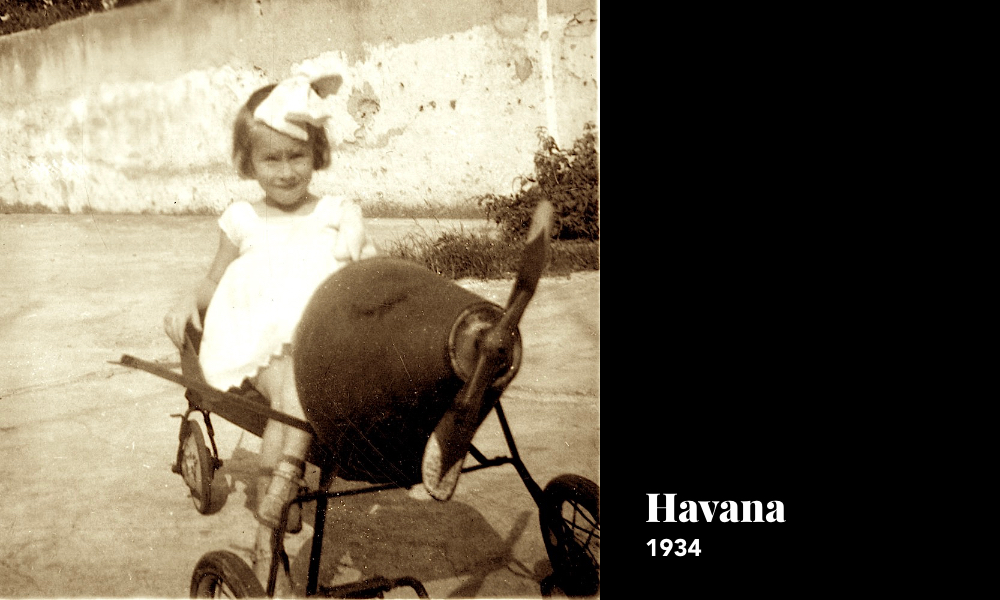
I can just picture my mother as a petite girl, often with a big bow on her tiny blond head, speaking with confidence and sitting upright and proud. She’s convinced that ‘las criadas’ are falling for her charade.
Since birth, she’s heard enough American English to pronounce some real words and to deliver the sounds and distinct cadence that to her young ears should pass as the perfect fake ‘ingles’.
Of course, my mother always gave a sample of her fake English each time she described that scene. So funny – it did sound American.
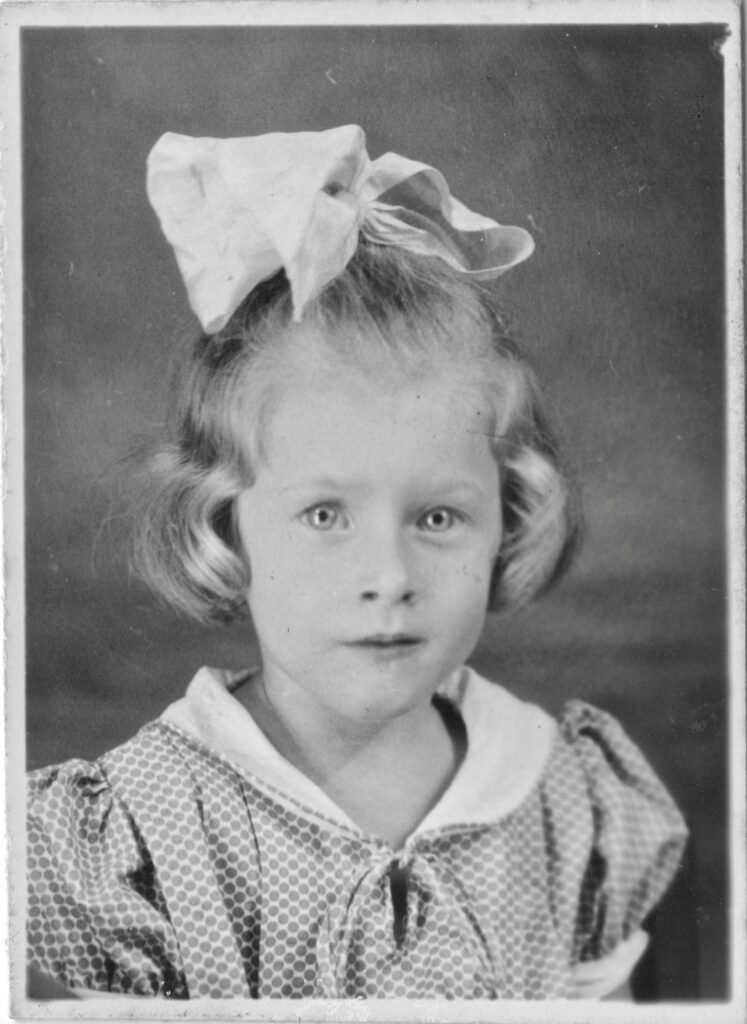
Little Adelita. (Adela De Zaldo y Moré)
In so many early photos, she’s wearing a big bow on her tiny blond head.
Havana, circa 1934. (©DeZaldoyMoré)
Like an actress honing her craft, Adelita would apparently stop by the kitchen often to put on a grand performance of some kind while dinner was being prepared around her.
The maids, one of whom would have had to help perch her up on the kitchen counter, must have been somewhat entertained by little Adelita’s constant theatrics and bursts of energy around the house.
A few surviving photos say everything about my mother as a child
I know little about that house in the Vedado neighborhood of Havana where those events took place, or even about the people who would have passed through there.
But not long ago I re-discovered photos of my mother from that era, and you can tell that she was trouble, in an exuberant kind of way.
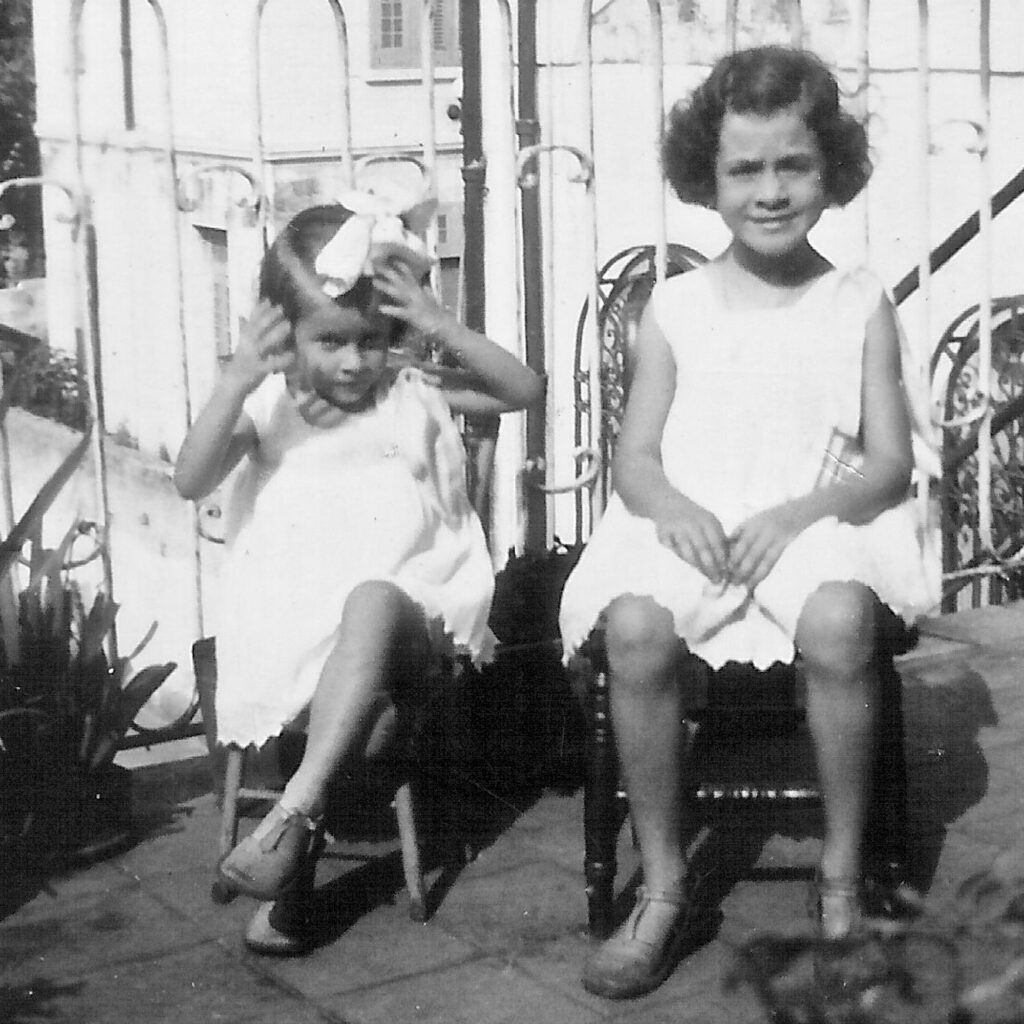
Adelita and Elenita de Zaldo y Moré, posing on their balcony.
Havana, circa 1934. (©DeZaldoyMoré)
My mother’s older sister, Elenita, often in those same photos, might not have always considered Adelita so cute.
My aunt Elenita was more reserved and elegant, and certainly more thoughtful and patient than my mother. And you get the impression from those pictures that little Adelita – or Chiqui, as the family called her – probably both entertained and exasperated her.
“Ay, Chiqui!,” I could hear Elenita say.
Chiqui would have been the one running through the house on an adventure, or making some insistent and vocal demand. Her personality seems to wriggle out from those wonderful black and white images that survive.
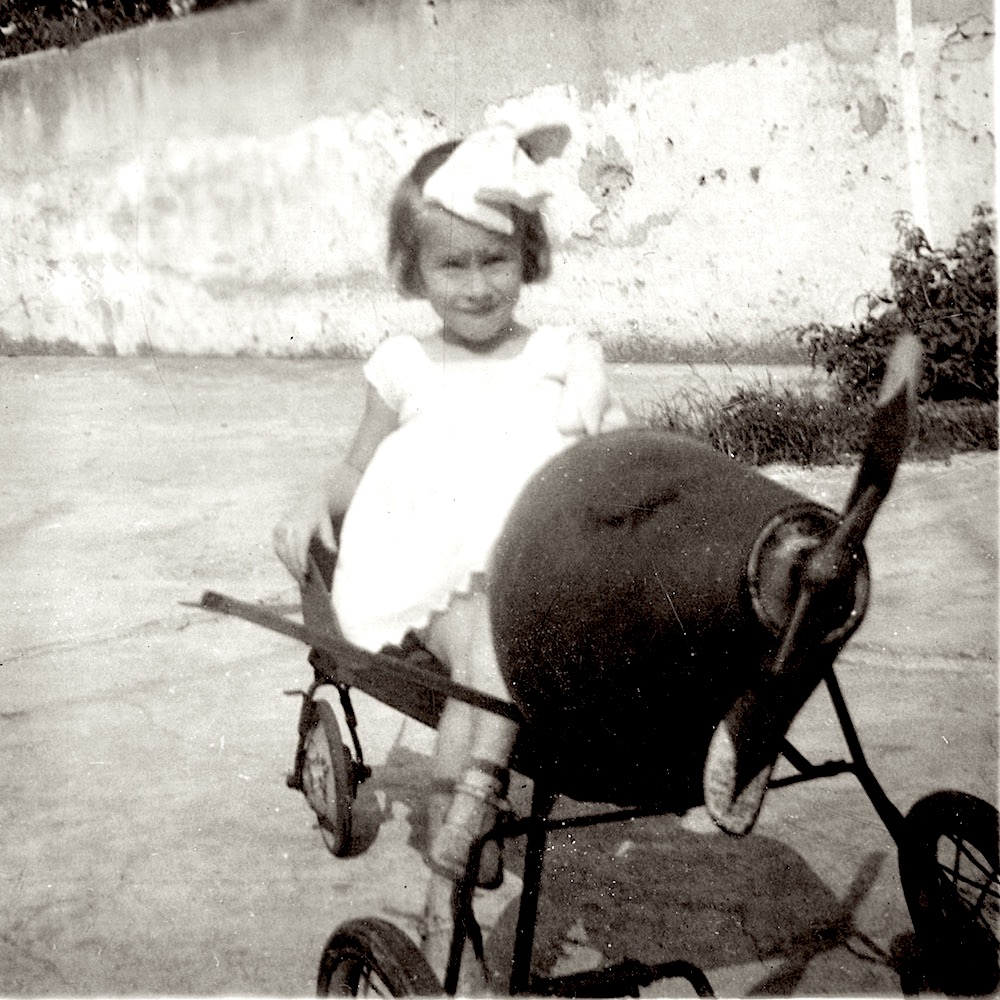
Adelita in a toy airplane. Always posing, as if putting on a show.
Havana, circa 1934. (©DeZaldoyMoré)
Thinking back to my childhood, I can relate to some of those demanding antics as a little girl – yes, you can call them bratty.
And my own two sons definitely inherited some of those more exuberant little Adelita traits – like always coming up with busy adventures in and around the house, or putting on performances in person or in front of a camera.
Those more assertive parts of our personalities – mine and of my sons – I know came from my mother, and the thought makes me smile.
Adelita’s stories would bring Havana’s past to life
As I grew up, far from Havana and any Cuban family, my mother’s vivid stories about her childhood would bring her memories to life. She rarely offered many details, just enough color, flavor, and sounds to take me back to those times.
Like her stories about the street vendors passing near her home – the “pregoneros” selling fruits and vegetables or candies in 1930s Havana.
For example, to describe the tamales vendor, my mother would mimic his call to customers as he walked down the street, shouting out, “Pican… y no pican…. los tamales!”
She loved to perform his cry, accentuating the Cuban pause between words and a strong staccato on the first syllables.
Even my sons remember hearing that story from my mother, and they can now perform the tamales vendor’s exact call with perfect rhythm, timing, and distinct Cuban flair.
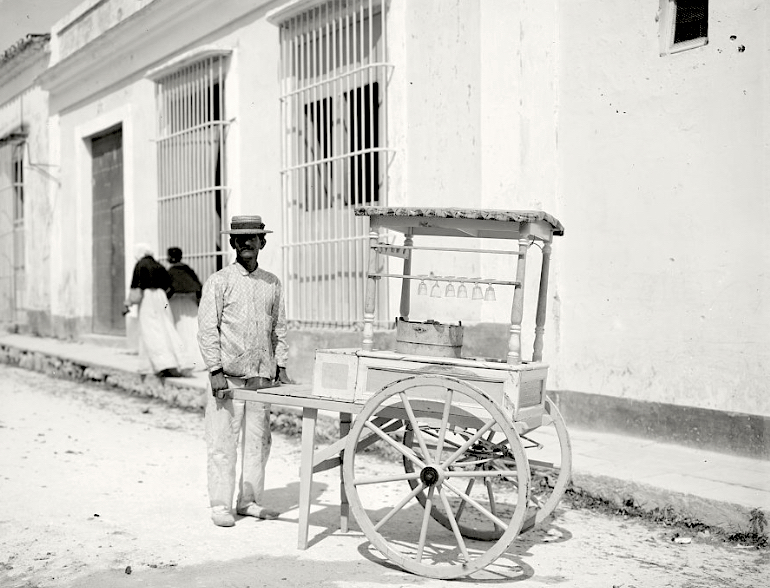
Havana street vendor, early 1900s. Photo courtesy Library of Congress-Prints and Photographs Division.
Her memories reflected the closeness of her family
Another great memory I loved to hear was about the times Tio Alberto would sneak out with my mother and her sister – when they were a bit older and bedtime was still so early – to go get “fritas y batidos”, or Cuban-style burgers and milk shakes.
Tio Alberto would knock on the sister’s bedroom window from the big wraparound porch, and off they’d go to enjoy an extended evening out in downtown Havana.
I don’t think my grandparents, or other relatives who lived in that house, would have been upset about those adventures with Tio Alberto.
It was a large and extended family, and it seemed that regular visitors would often stop by their comfortable home. My mother would mention the tradition of big family dinners, or the occasional small gathering with music out on the spacious front porch.
Those stories and others I’ve heard from her childhood made it clear to me that finding ways to enjoy life with family and friends was important, in spite of the challenges that were always present in day-to-day Cuba.
Remembering my mother today brings me happy thoughts
I’ve never been to Cuba. But those special memories my mother shared with me are now my very own.
Her stories recreated the happier and more animated moments of her childhood. And the scenes they described played out from her singular perspective – as the youngest in a family that seemed in a constant whir of activities, characters, and events.
And if there were a few unhappy memories from her life in Havana through the 1930s, 40s and 50s – and I’m sure there were – she rarely spoke of them.
What’s the point in remembering such things? I believe avoiding less pleasant thoughts is a philosophy she learned from her father, René, and I am thankful for that.
Ay, Chiqui!
As I remember today my mother, Adela De Zaldo y Moré, on this anniversary of her passing in 2014, I do miss her and her wonderful charms.
And there are many people in many places, during her 84 years, that were touched by my mother’s special style. It’s nice to know that they would all smile when thinking back to those moments of experiencing Adelita in life.
But my smiles feel full with true happiness because my mother gave me, in her most endearing way, the only memories I have that bring her Havana childhood and Cuban family to life.