
 Previous
An Engagement Trip for Chiqui and Pepín
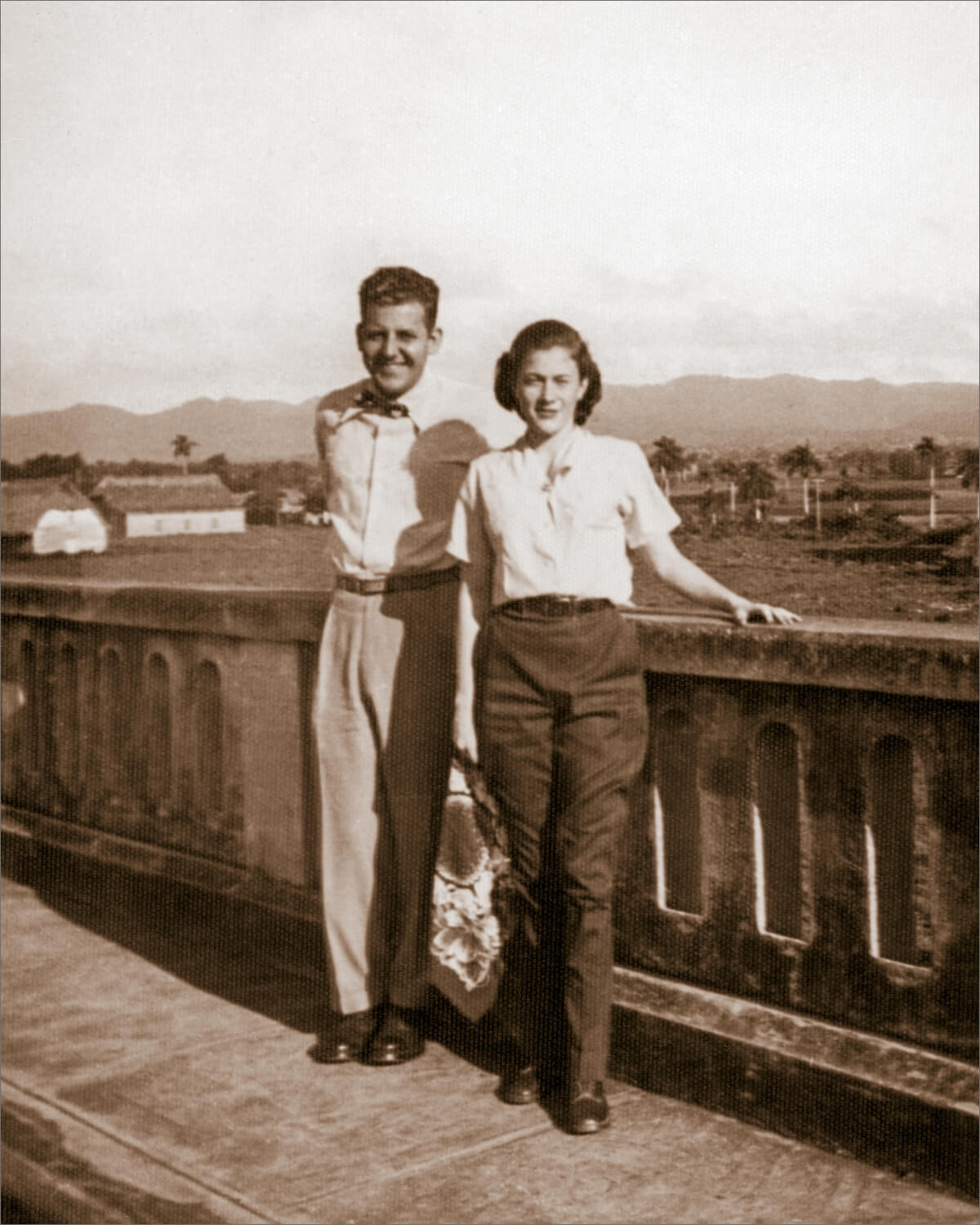
My parents both grew up in Havana, but I don’t really know the story of how they first met.
There’s only a vague memory of hearing that Chiqui and Pepín, as they were known to their families, were introduced through my aunt’s school mate.
But I do remember my mother mentioning something about celebrating their wedding plans.
It was with a little travel adventure, although I never knew the details. Fortunately, I recently saw that on the back of several photographs from that trip my mother had written “Viaje de Compromiso”, or Engagement Trip, 1948.
Engagement trip? It seems to me that such a thing was not a tradition in Cuba in the 1940s.
I imagine, instead, that the idea for a trip from Havana to Trinidad, Cuba belonged to my maternal grandparents and, most likely, was my grandmother’s wise inspiration. It would be a thoughtful gift and an opportunity for all to get better acquainted.
Of course, my grandparents had to travel with Chiqui and Pepín. They would serve as tour guides and chauffeurs and, also, as the chaperons required for a respectable young lady.
At the time, my mother was only 19 years old and my father, 22.
Why a visit to Trinidad?
Travel plans for this Engagement Trip must have been exciting for the young couple. It was to be a formal trip as new fiancés and the start of big changes ahead of them.
And I also wondered how they decided on the destination. This Engagement Trip could have been to any number of beautiful locations near Havana.
Why choose Trinidad, which was then a slow, 10-hour drive from the Cuban capital?
My grandparents actually had a good reason to visit that small and very historic city on the southern coast of Cuba.
Trinidad, as I now know, was a significant place in the family history of my grandfather René De Zaldo.
His father, Rafael, had been born in Trinidad a 100 years before their visit.
Rafael DeZaldo y Cueto came into this world in 1847, at the same time as his mother died in childbirth.
Exciting 1940s roadtrip, and their first flight in an airplane
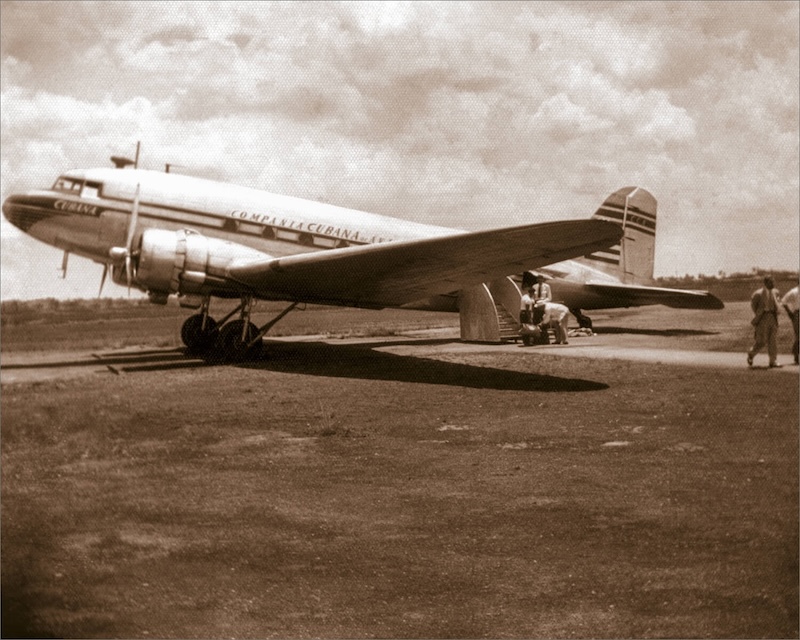
Since traveling from Havana to Trinidad by car would take about 2 days with stops, my grandparents decided that they would all fly, and then drive.
And for my parents this would be the first time either of them would travel in an airplane.
Of course, that wasn’t so surprising in the 1940s, and especially in Cuba, because back then air travel was still a luxury and quite expensive. And that made it all the more special and exciting.
My grandparents were already familiar with flying, especially my grandfather who was one of the first licensed pilots in 1910s Cuba.
Traveling by airplane, however, did not mean that there would be no road trip.
Since Trinidad didn’t have an airport in 1948, the flight on Cubana Airlines would have been from Havana to Camagüey, Cuba. And from there it was still another 4 hours by car to finally reach Trinidad.
It was a long journey , but I’m sure my father didn’t mind the extra car ride.
He was traveling with his camera, so the road trip was a chance to take even more photographs of the unfamiliar countryside and tropical views along the way.
With beautiful old photos, I got to travel with my parents through central Cuba
Growing up, our parents never shared with me and my brother the enchanting photographs my father took during their engagement trip.
In fact, we never heard much about their early lives in Cuba, before they decided to move to New York in 1957, which was pre-revolution. And I don’t remember our parents ever sharing stories about their experiences and impressions during the journey they took to Trinidad before they were married.
Years later, my father’s photos from that road trip ended up in a box at my brother’s home. I only first remember seeing them after my brother selected a few to scan and print in 2006.
More recently, after years of researching into our family’s era in Cuba, I took an interest in that collection of old images. And I’ve loved looking through those pictures every now and then because I keep seeing something new.
A little research and some Google Maps have helped me get familiar with the places my parent visited during their trip.
And those new details, together with the discoveries I’ve made about the lives of our parents and generations of their families in Cuba, have transformed those 1948 photographs into fascinating glimpses into my past.
Never thought of my father as an artist, but his photographs of old Cuba are lovely
Sometime around the age of 22, my father bought himself a camera in Havana and started taking pictures.
He had previously studied some art and architecture in school, and the few sketches of his that survive show that he developed quite a skill for drawing.
He clearly also had a talent for photography.
My father, who ended up working in civil engineering for the Port Authority of NY and NJ, was known to be a practical man. He liked to build things “nice and square”, as he would say in his strong, Cuban accent. I can’t imagine anyone ever describing him as creative or romantic.
Yet as a young man, when life seemed easier and he was in love, my father took more time to frame the beauty around him.
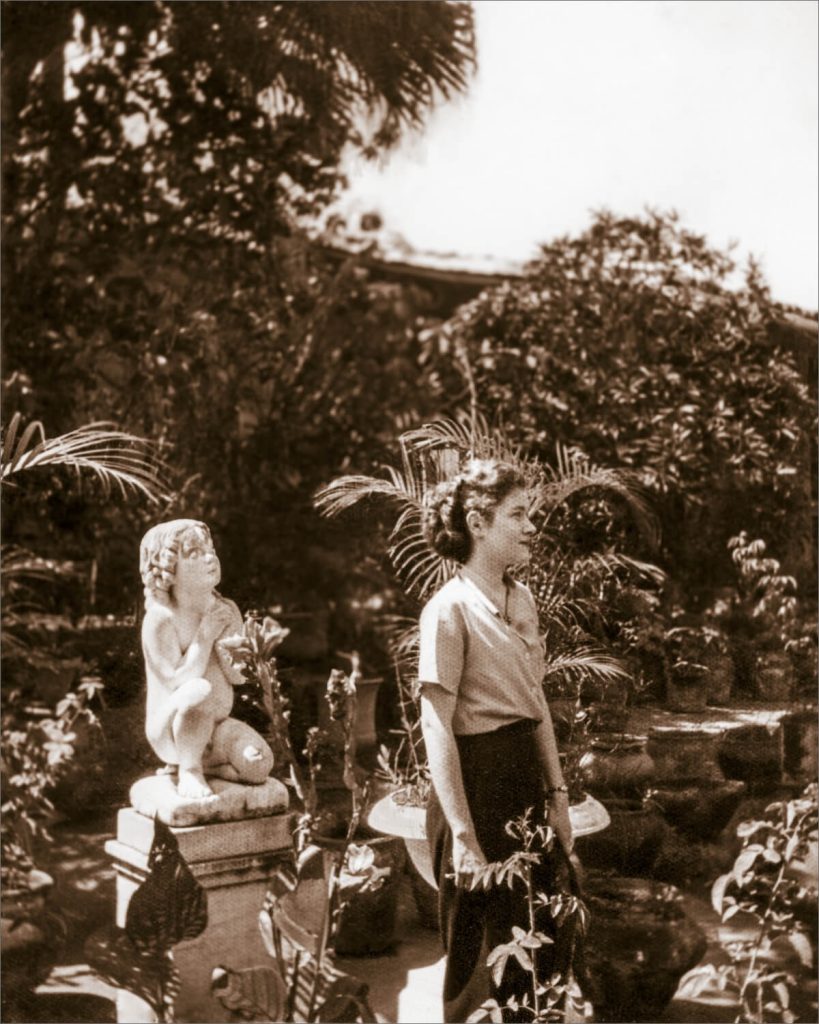
My father certainly took a lot of pictures during their Viaje de Compromiso to Trinidad. Maybe he was just still excited about his new camera.
But I believe it was the stunning landscapes along the roads through central Cuba, as well as the enduring colonial architecture in Trinidad, that enticed my father to shoot such a wonderful variety of images.
Artful landscapes and photographs that captured moments in time
Surprisingly, my father had a wonderful eye for composition and for capturing a perspective that was intriguing.
Of the photographs my father took during the visit to Trinidad, few are shots of people just standing in front of the camera
Instead, his photos mostly frame grand vistas of the distant mountains and interesting views of the colonial buildings and plazas in the historic downtown.
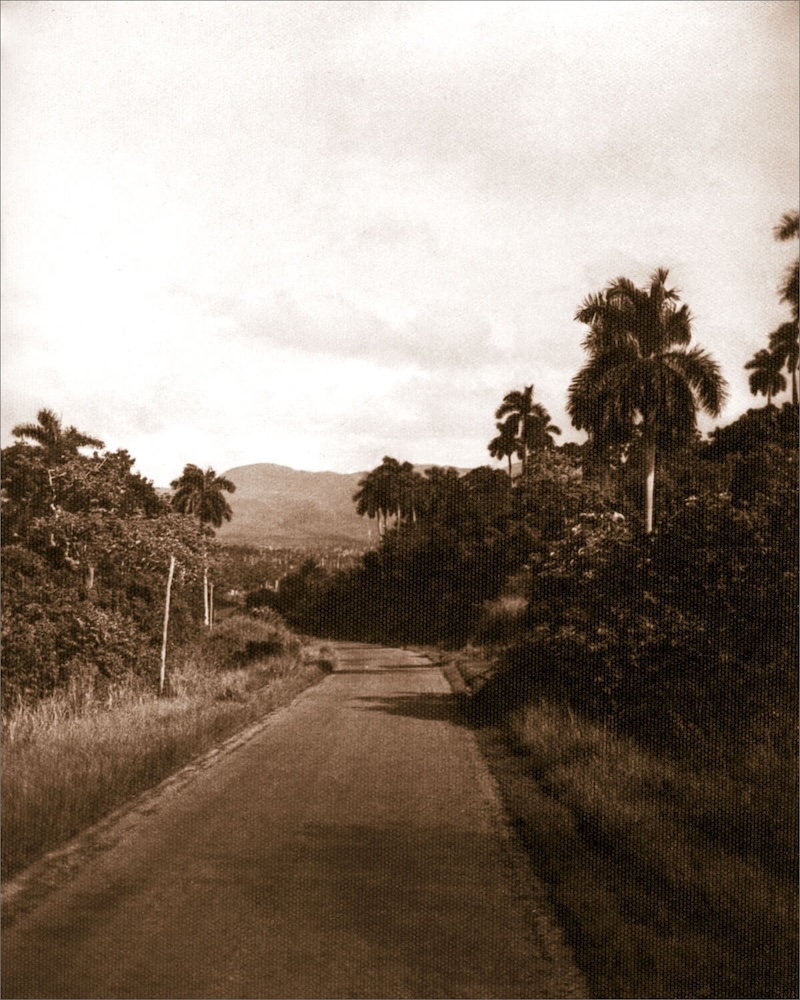
Yet, the images most special to me are the ones which capture my family in unique moments in time.
These are more intimate photos of casual scenes, and they offer insights into the characters or the personal dynamics taking place.
In one image, for instance, my father got a quick shot of four people standing on one of Trinidad’s old streets and looking towards the building before them.
My young grandmother, only 38 at the time, stands with a camera to her eye, smiling and confidently taking a photograph. (I didn’t imagine my grandmother ever taking photos.) And behind her is my mother, in her bright summer dress calling out loudly to someone beyond the scene. (Yes, my mother acting boldly was a trait I was familiar with and remember fondly.)
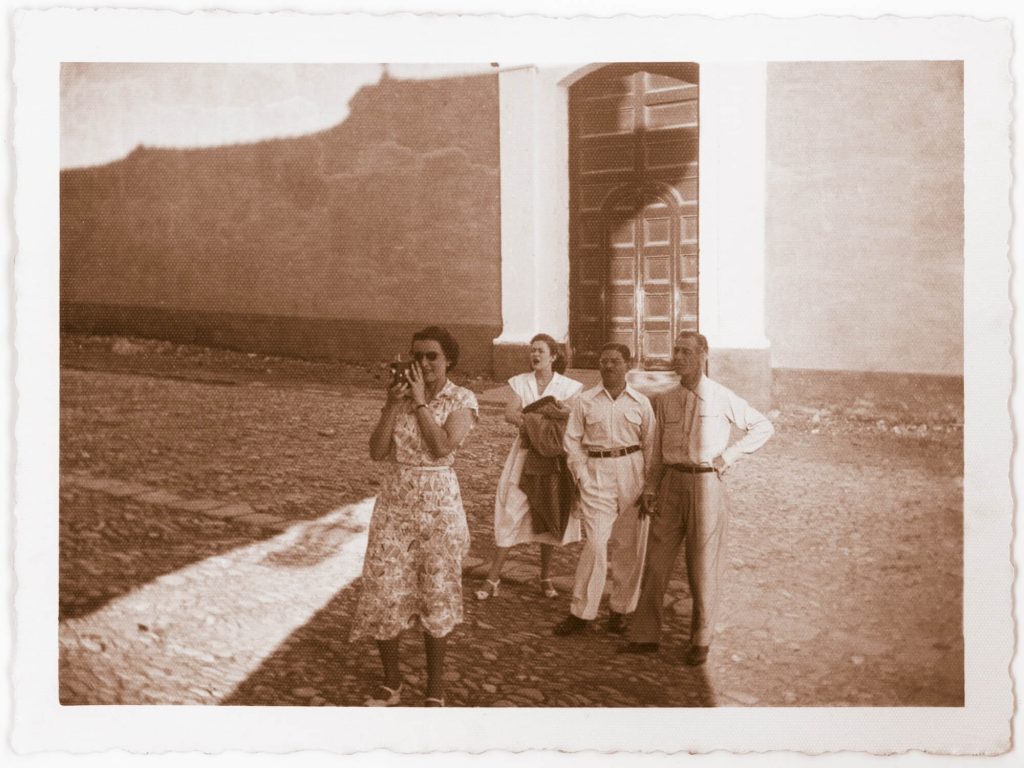
The last two people in that photo are my grandfather, with his hand on his hip, and standing close to him, a gentleman whom I believe was a cousin. I barely met my grandfather René, and it was nice to see him looking so relaxed next to a family member who he probably didn’t see often.
As I gazed at that unposed photograph I could imagine standing happily among these relatives of mine.
And through that captured scene I sensed that these people were genuinely enjoying their time together, that they were “cariñoso” or affectionate, and that my father – the fiancé – would be welcome into my mother’s family.
Vintage views of Trinidad’s old town center
Trinidad is a historic city, one of the oldest in Cuba that was founded for the Spanish Empire. The settlement of Villa de la Santísima Trinidad, it’s original name, was established in 1514.
Amazingly, the city center has many old buildings, some centuries old, that are almost unchanged today. They are all still wonderful to photograph.
And these traditional homes, churches and public plazas that are the same ones that my great-grandfather, and great-great grandparents, walked by in the early and mid-1800s.
In Trinidad’s historic downtown you can still experience the main church in the town center – the Iglesia de la Santísima Trinidad – rebuilt in the 1870s. Beside it is the former palace of the Brunet family, constructed during the late 1700s.
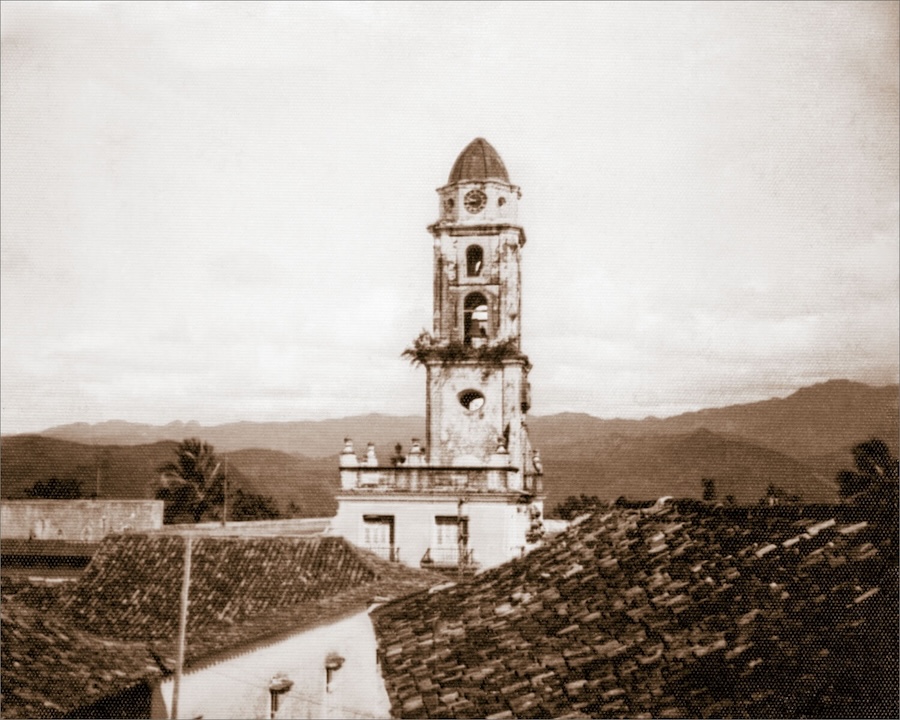
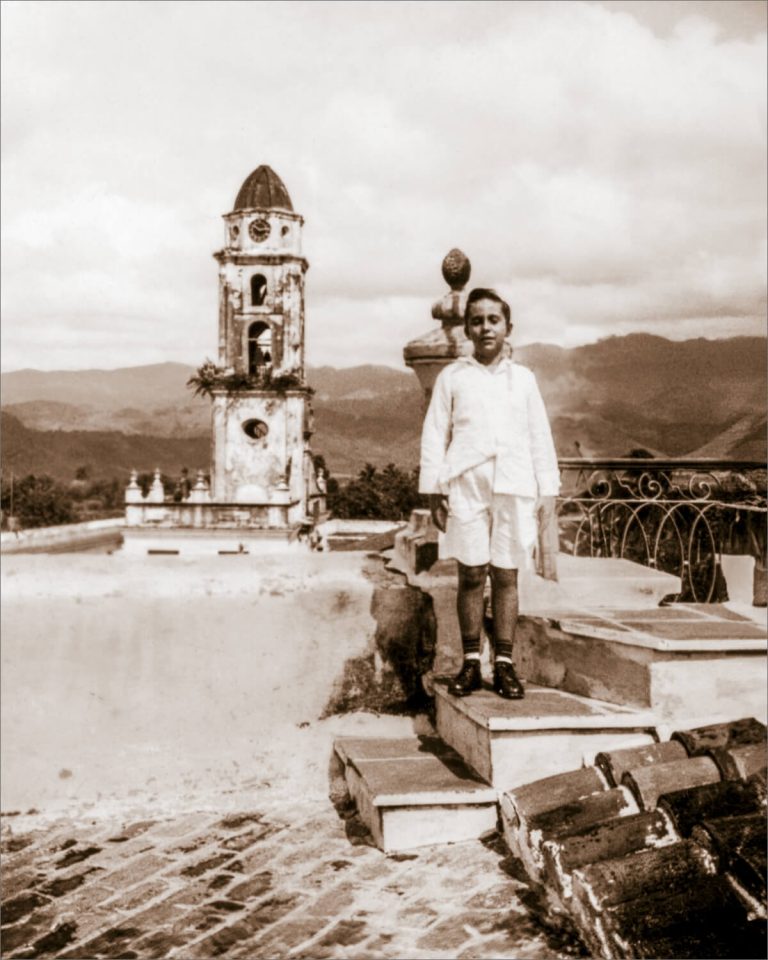
And about a block away you can easily see the tall tower of the old monastery, or the Convento de San Francisco, finished in 1814.
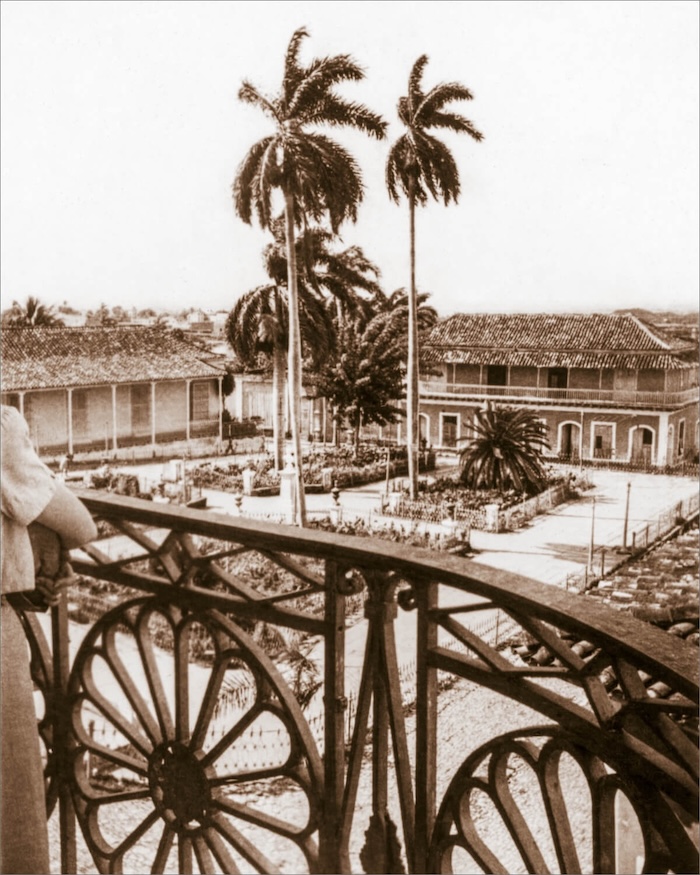
And while I’ve never yet been to Trinidad, I think the most picturesque spot in the heart of the city is its town square, or Plaza Mayor.
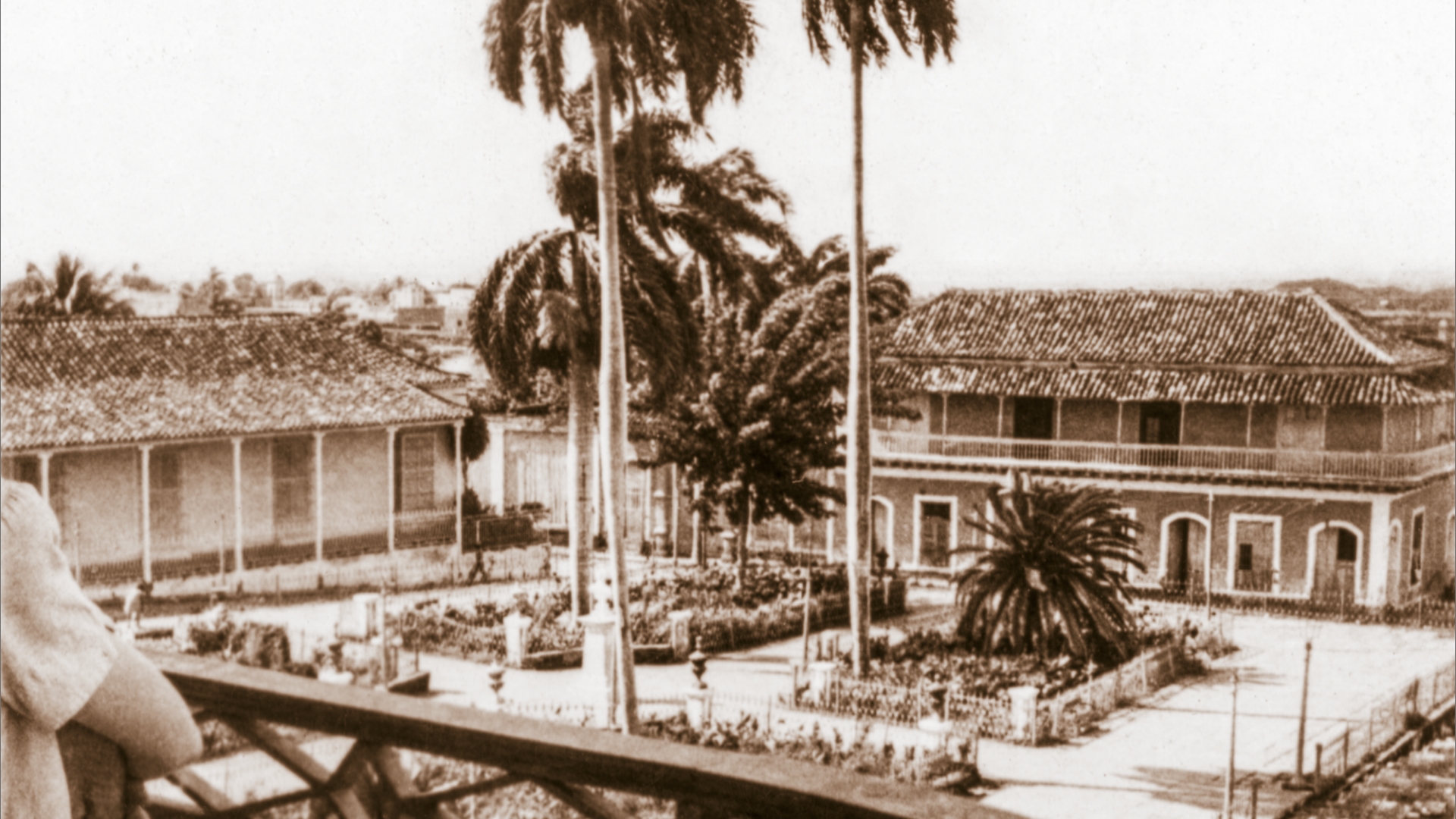
This public space, from the 1850s, is charming and elegant. Its walkways cross between tall palm trees and leafy tropical plants, and the entire plaza is surrounded by a wrought iron fence and Spanish colonial buildings that feature shaded verandas and red-tiled roofs.
My father’s perfectly framed view of the Plaza Mayor from the balcony of the Palacio Brunet (not accessible today) is my favorite of his photographs from 1948.
Photographs reflecting the surrounding mountains in the Valle de los Ingenios
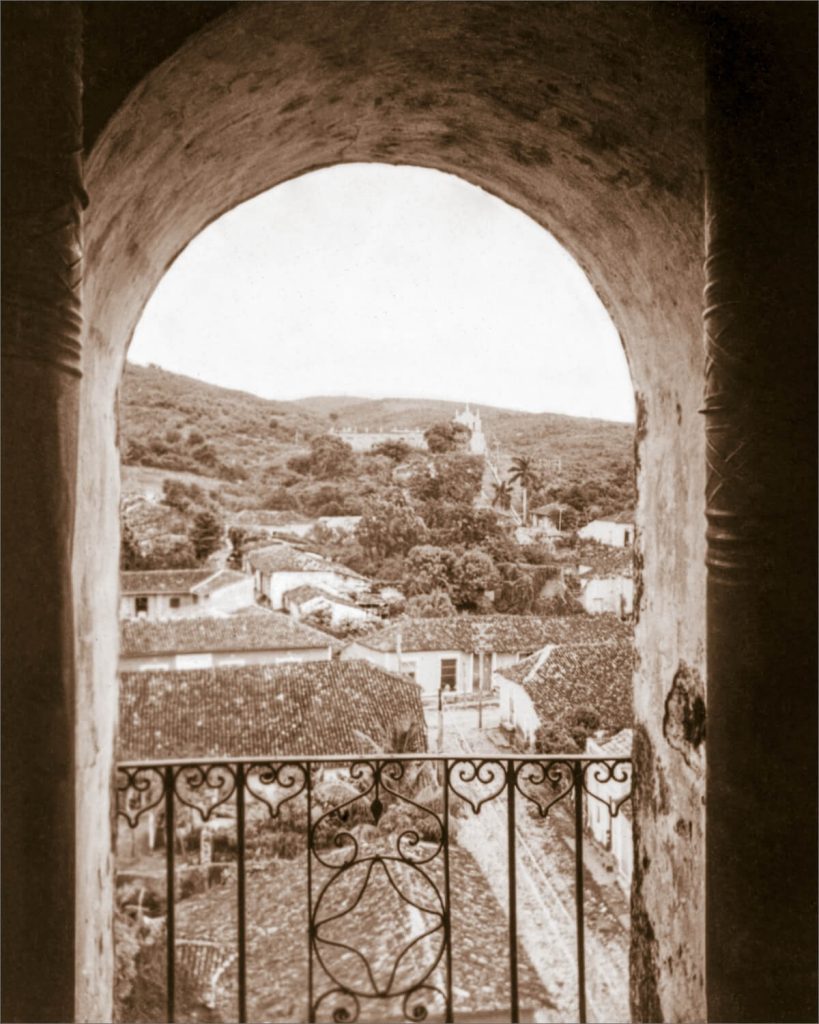
A good place in downtown Trinidad to appreciate the city’s geographical location is up in the monastery’s bell tower, which is still open to visitors .
From there, looking out of each of the four tower archways, you get a 360-degree view of the extended parts of the city, as well as of the surrounding mountains and the valley known as Valle de los Ingenios, or the former Valley of the Sugar Mills.
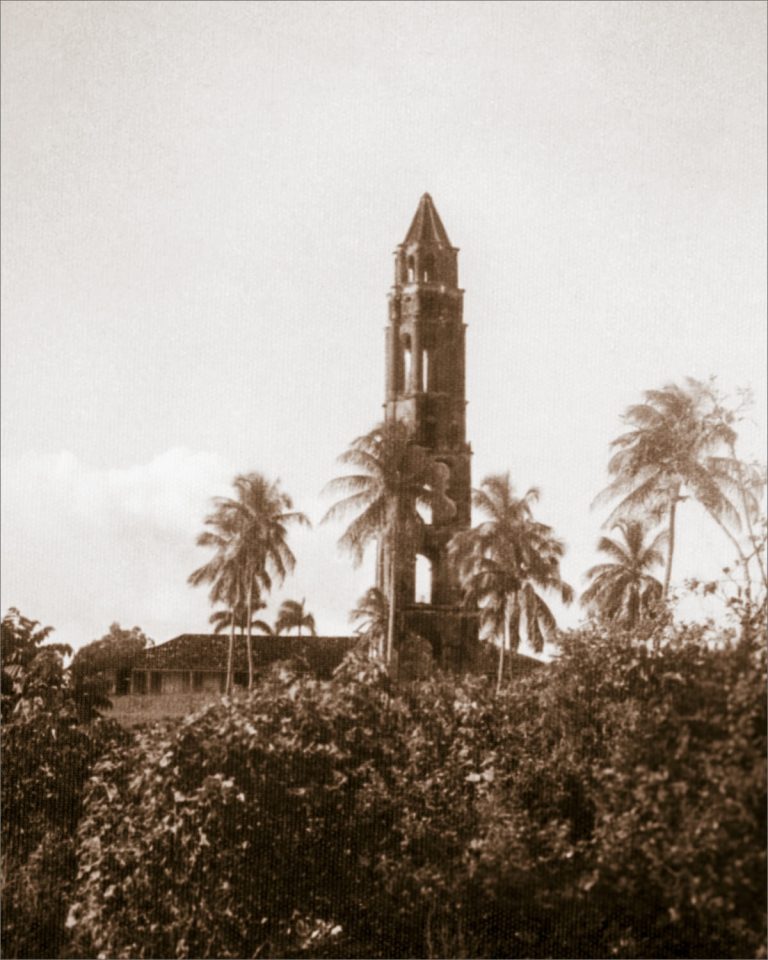
Another important and historic landmark – not far from Trinidad’s town center – is the tower of the former Manaca-Iznaga sugar plantation.
It’s an impressive site and much the same now as when my parents visited in the 1940s, although my father captured a photograph that made the watch tower seem more abandoned and haunting than those taken in recent years.
History of Trinidad and the growth of Cuba’s Valley of the Sugar Mills
The history of Cuba is forever tied to the history of Spain.
Soon after the Spanish arrived on the island, the first sugarcane plants were grown in the rich soil around Trinidad, and by the mid-1700s the region was transformed into the center of Cuba’s sugar industry.
This sweet crop, always in demand, grew on large plantations that created immense wealth for their owners. But this wealth developed, and was only possible, by the labor of their slaves.
Trinidad’s infamous Valle de los Ingenious continued growing and producing sugar with slave labor until almost the end of the 1800s.
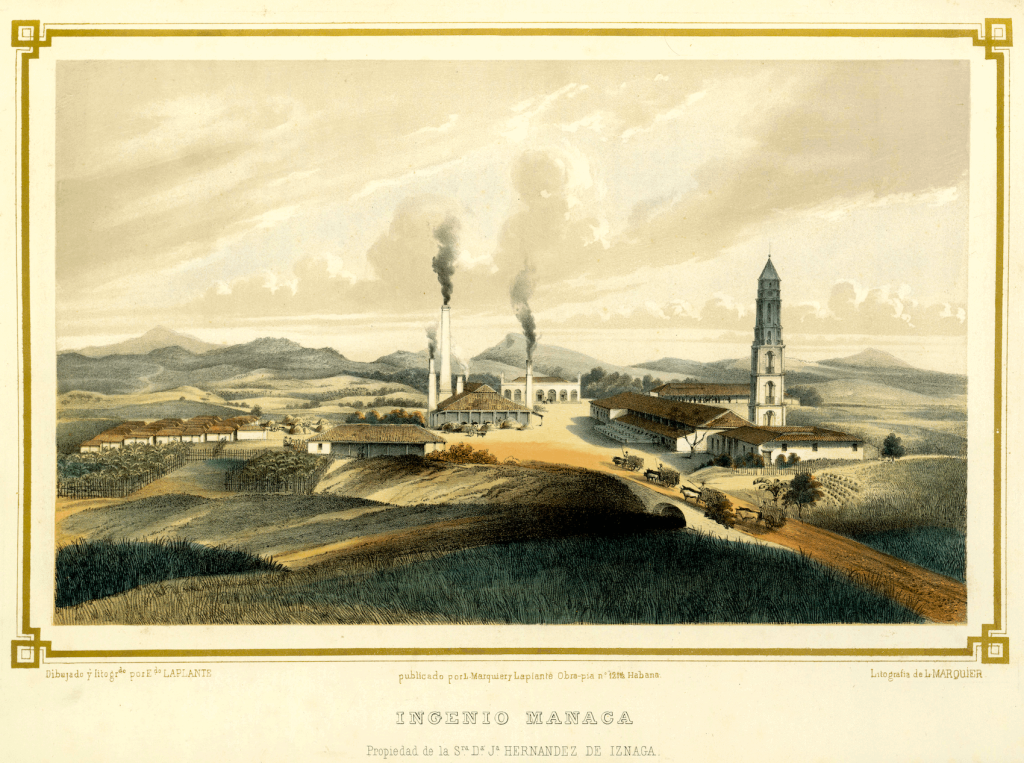
The beauty of the verdant landscape in this valley still remains, yet I imagine that tremors from the past still echo in the winds across all of Cuba.
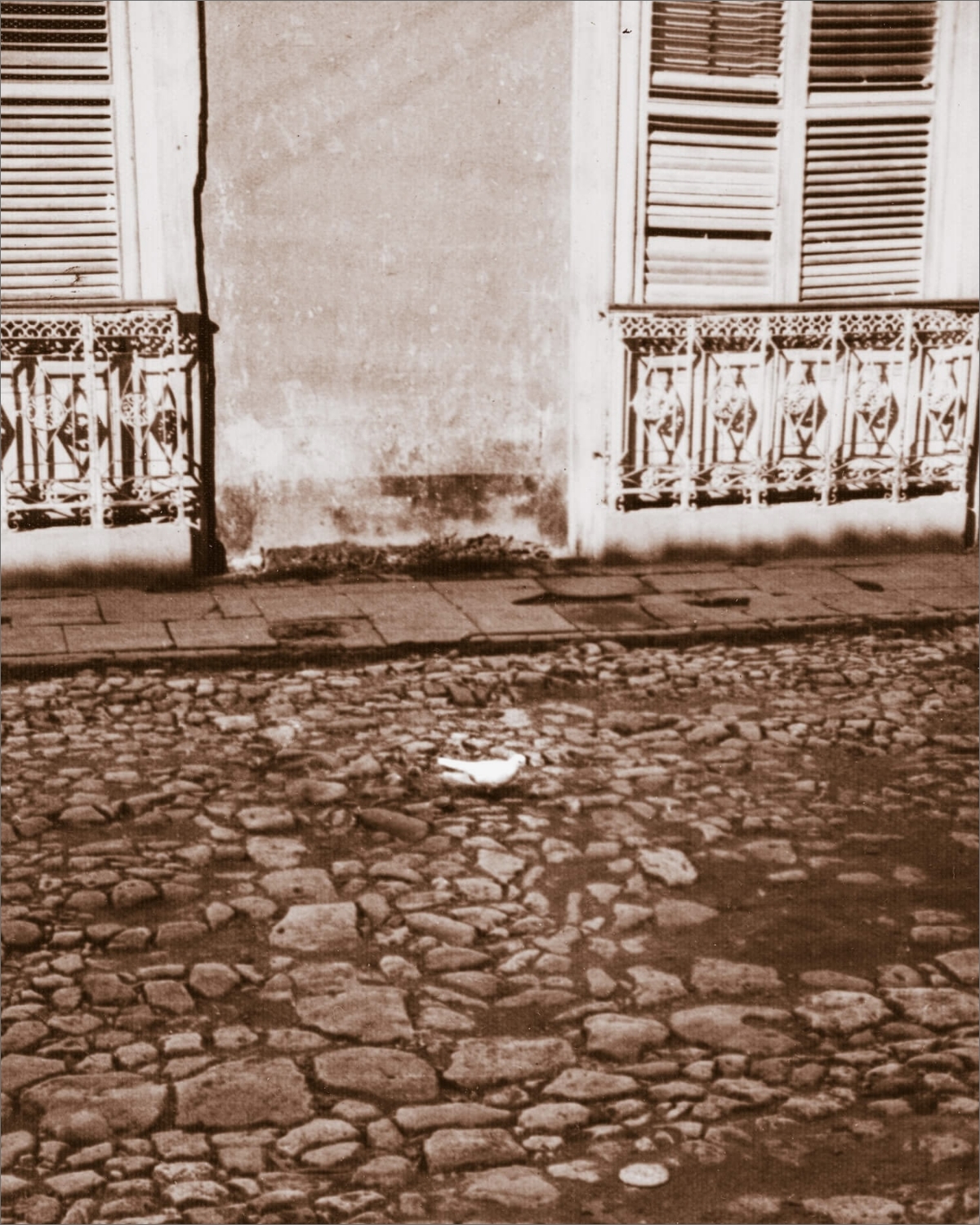
When I finally get to visit Trinidad, I know my experience will be overwhelming. Those haunting echoes of slavery will mix together with the emotions I will feel from just being able to walk the same cobblestoned streets — and be within the same spaces — where two generations of my De Zaldo family lived during the first half of the 19th century.
Few families living in Trinidad during that period would have been able to distance themselves from involvement in the sugar and the slave industries. Unfortunately, I confirmed the details of my ancestors’ activities and relationships in those trades. The research process to make those connections to my family has been fascinating, but the facts will forever be difficult to reconcile.
What I do wonder is how many of those historical details and family stories my grandparents were aware of during that visit to Trinidad and the Valle de los Ingenios.
My mother certainly knew nothing of those stories. She barely had details to share with me about her own grandparents, let alone the life of a great-grandfather born in 1806.
My father’s 1948 photographs of Trinidad captured older views of the Cuban colonial city
Photographs my father took with his camera in the 1940s offer views that are both similar and quite different from those taken today.
For instance, in the center of Trinidad, the Spanish colonial landmarks are very close to each other, so a good photographer can take striking images from a few key spots.
If you stroll near the main church and the former Brunet palace (now the Museo Romático) that are in front of the Plaza Mayor, it’s possible to frame those two handsome buildings into one shot that will also include the monastery’s classic bell tower just a block away.
Photographs almost like the ones my father took over 75 years ago are easy to come across today online.
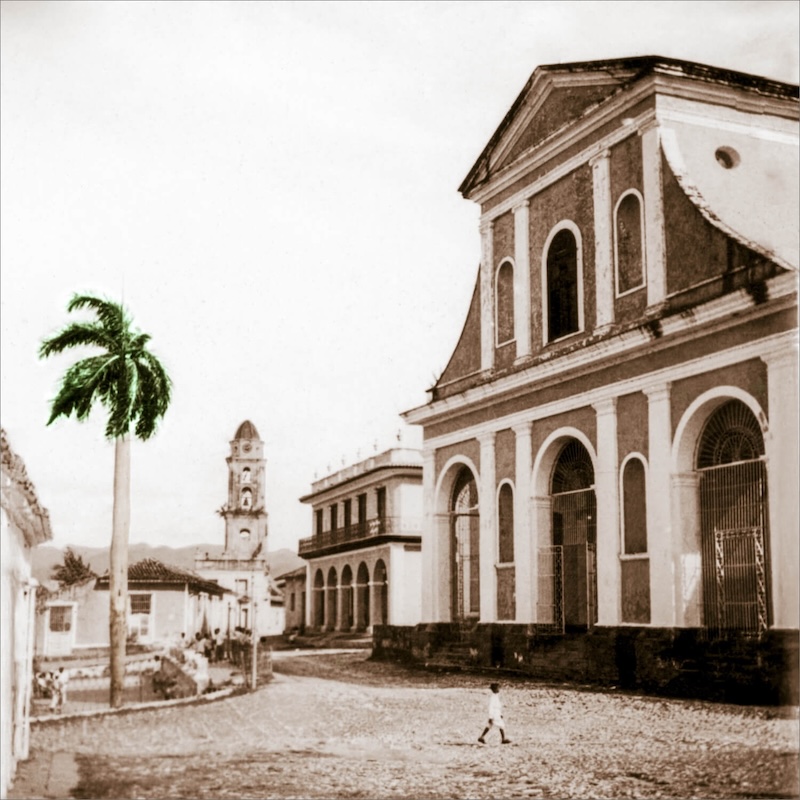
However, Trinidad has changed a bit since 1948.
The historic section — now a UNESCO World Heritage site — has been well-preserved by its residents. But beyond the downtown, new buildings have since been built and some older ones have disappeared.
My father captured one 18th century structure that is now gone.
While up in the bell tower downtown, my father had framed a view up the north hillside showing only a scattering of small buildings. And at the top of the hill you can see what was once a convent and hospital, first constructed in 1716.
This large white structure, referred to as La Popa, had been expanded through the 1800s and was already abandoned when my parent visited. However, today the site is a ruin, with only the front facade of the old chapel barely standing.
So wonderful to travel back to a Cuba in other times
These old photographs, rediscovered, are my new treasures.
Through them I see the landscapes of Cuba as my parents did when they were only about 20 years old and just imagining their future together. The images have also helped me form new impressions about my grandparents, who I’m slowly learning were quite extraordinary people.
Even the photo prints themselves are special. Developed back in the 1940s, this batch of Trinidad images were printed in half-tone, a process which makes each image appear through lighter and darker dots on paper.
And now with a sepia color blended into the old black and whites, the new versions seem warmer, softly textured and frozen in time.
To me, this collection is beautiful and meaningful, rich with both the history of previous generations and that of Cuba’s intriguing and conflicting past.